life on exoplanets is a hot topic in astrophysics, and scientists are using a virtual lifeless Earth to enhance their search for extraterrestrial life.
Understanding Exoplanets
Exoplanets, or planets outside our solar system, have become a focal point in the search for life beyond Earth. Understanding these distant worlds is crucial for scientists aiming to discover life on exoplanets. With thousands of exoplanets identified, researchers are now developing methods to study their atmospheres and surface conditions.
One innovative approach involves creating a virtual lifeless Earth. By simulating various environments, scientists can better understand the indicators of life. This model helps researchers identify potential biosignatures, or signs of life, which could exist on exoplanets.
Key factors that determine the habitability of exoplanets include:
- Distance from their host star, which affects temperature.
- Atmospheric composition, crucial for protecting life from harmful radiation.
- Presence of liquid water, a fundamental requirement for life as we know it.
Through these methods, scientists are optimistic about uncovering evidence of life on exoplanets, expanding our understanding of the universe and our place within it.
The Role of Virtual Earths
The quest to discover life on exoplanets has taken a significant leap forward through the development of virtual Earths. These simulated environments allow scientists to explore conditions that may exist on distant planets without leaving our own. By recreating various atmospheres and landscapes, researchers can better understand the potential for life on exoplanets.
Virtual Earths serve several important functions in the search for extraterrestrial life:
- Modeling Ecosystems: They enable scientists to model how ecosystems might evolve in different conditions, providing insights into possible life forms.
- Testing Hypotheses: Researchers can test hypotheses about the characteristics necessary for life, such as temperature, atmospheric composition, and more.
- Guiding Observations: These simulations help guide telescopic observations, identifying which exoplanets are most likely to host life.
As technology improves, the accuracy of these virtual models will enhance our understanding of life on exoplanets, bringing us closer to answering the age-old question: are we alone in the universe?
Methods for Detecting Life
Detecting life on exoplanets involves several innovative methods that scientists have developed to explore the cosmos. These techniques aim to identify signs of biological activity or conditions suitable for life beyond Earth.
- Transit Method: This widely used technique involves observing the dimming of a star’s light as a planet passes in front of it. By analyzing the light spectrum, scientists can detect atmospheric components that might indicate the presence of life.
- Direct Imaging: Advanced telescopes can capture images of exoplanets directly, allowing researchers to study their atmospheres and surface conditions. This method helps in identifying potential biosignatures.
- Radial Velocity: By measuring the star’s wobble caused by the gravitational pull of an orbiting planet, scientists can infer the presence of an exoplanet and its characteristics, such as mass and orbit.
- Astrobiological Signatures: Searching for specific gases like oxygen and methane in a planet’s atmosphere can provide evidence of biological processes, suggesting the potential for life on exoplanets.
These methods are essential for advancing our understanding of the possibility of life beyond our solar system.
Recent Discoveries in Astrobiology
Recent discoveries in astrobiology have significantly advanced our understanding of life on exoplanets. Researchers have utilized advanced technologies to identify potential biosignatures, chemical indicators that suggest the presence of life. These biosignatures can include gases like oxygen and methane, which, when found in specific ratios, hint at biological processes.
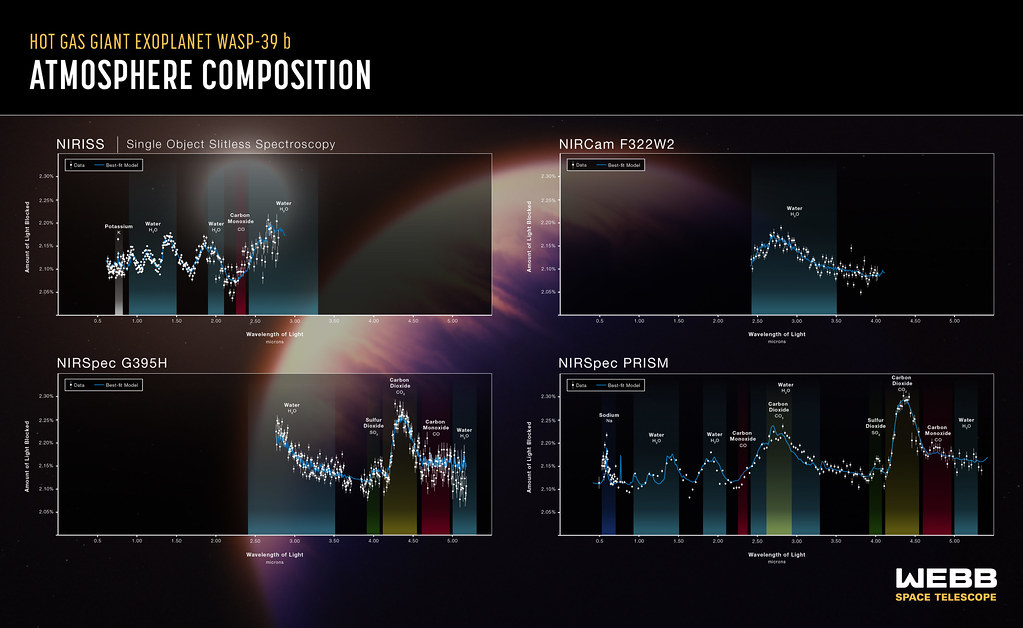
Moreover, missions such as the James Webb Space Telescope have provided unprecedented data on the atmospheres of distant exoplanets. This data is crucial as it allows scientists to analyze the composition of these atmospheres and search for signs of habitability.
Key findings include:
- Detection of Water Vapor: The presence of water vapor in exoplanet atmospheres strengthens the case for potential life-sustaining environments.
- Identification of Organic Molecules: Organic compounds have been detected on several exoplanets, suggesting that the building blocks of life may be widespread in the universe.
- Variability in Atmospheric Chemistry: Variations in chemical compositions hint at diverse environments that could support different forms of life.
These advancements underscore the dynamic nature of astrobiology and the ongoing quest to understand life on exoplanets.
Challenges in Exoplanet Research
Researching life on exoplanets presents numerous challenges that scientists must navigate to make significant discoveries. Understanding the vast distances between Earth and potential exoplanetary systems complicates the search, as current technology limits our ability to explore these distant worlds directly.
One of the primary difficulties is the identification of suitable candidates for further study. While thousands of exoplanets have been discovered, only a fraction are located in the habitable zone of their stars, where conditions may support life. Furthermore, the characteristics of these planets, such as atmosphere composition and surface conditions, require sophisticated analysis.
Another challenge involves the resolution limitations of current telescopes. Many exoplanets are too faint or too close to their host stars, making it difficult to detect signals that indicate the presence of life. Scientists also face the hurdle of distinguishing between biological and abiotic signals, which can complicate interpretations of gathered data.
Despite these obstacles, ongoing advancements in technology and innovative methodologies are paving the way for deeper insights into life on exoplanets, enhancing our understanding of the universe and our place within it.
Future of Space Exploration
The future of space exploration holds exciting prospects as scientists continue to seek out life on exoplanets. As technology advances, our ability to detect and analyze distant worlds becomes increasingly sophisticated. The development of next-generation telescopes and space missions is expected to provide unprecedented insights into the atmospheres and potential habitability of these celestial bodies.
One promising avenue involves the use of artificial intelligence to enhance data analysis from telescopic observations. This method can help identify biosignatures — chemical indicators that suggest the presence of life. By training AI systems on known life forms and their signatures, researchers aim to refine their search for life on exoplanets.
Furthermore, upcoming missions such as the James Webb Space Telescope are set to revolutionize our understanding of exoplanets. These advancements will not only improve detection methods but also allow for more detailed studies of planetary systems that may harbor life.
In summary, the future of space exploration is bright, with innovative technologies paving the way for discoveries that could confirm or refute the existence of life on exoplanets.
Implications for Humanity
The search for life on exoplanets has profound implications for humanity, reshaping our understanding of our place in the universe. As scientists develop new methods to detect life beyond Earth, they are not only expanding the boundaries of astrobiology but also addressing fundamental questions about existence and our responsibility as stewards of our planet.
Discovering life on another planet could redefine philosophical, ethical, and scientific paradigms. It may lead to new technologies and innovations inspired by extraterrestrial ecosystems, fostering advancements in sustainability and conservation efforts on Earth. Furthermore, understanding how life adapts in different environments could offer insights into our own planet’s future, especially in the face of climate change.
Additionally, the prospect of encountering extraterrestrial life prompts discussions about potential communication and interaction with other civilizations. Such interactions could challenge our perceptions of culture, intelligence, and community. The quest for life on exoplanets not only fuels scientific curiosity but also encourages humanity to unite in the pursuit of knowledge and understanding, fostering a sense of shared destiny among the stars.
By James Webb Space Telescope via Openverse
References
Related reading
Security Expectations: Proven Insights from Barracuda MSP Research · Telangana woman beheaded: Shocking land dispute tragedy · Stock futures fall: The Proven Impact of Midterm Elections